Jump Squat
Why it matters
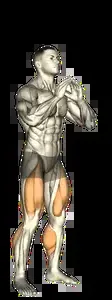
The Jump Squat builds strength and size in your quadriceps, glutes, hamstrings and rectus abdominis. As a compound movement, it trains several muscles together and carries over to real-world strength and power.
How to do it
- Set your feet about shoulder-width with your toes turned out slightly.
- Set a tall chest and brace before you descend.
- Break at the hips and knees together and lower under control.
- Descend until your thighs reach at least parallel to the floor.
- Drive through the middle of your foot to stand back up.
- Move as fast as you can on the way up while staying in control.
Coaching cues
- Intent is the point — every rep should be maximally fast, and the set ends when speed drops.
- Keep your weight balanced over the middle of your foot.
- Let your knees track in line with your toes.
- Keep your chest up as you descend and stand.
- Drive through your knees and feel the front of your thighs work.
Watch out for
-
Grinding out slow reps once fatigue sets in.
This takes work off the target muscle and reduces what you get from the set.
Instead End the set the moment bar or body speed visibly slows.
-
Letting the knees cave inward.
Knees caving in is a weaker position and takes force off your glutes.
Instead Push your knees out toward your little toes as you descend and stand.
-
Letting the heels lift off the floor.
On your toes you lose your base and shift the squat onto your knees.
Instead Keep your whole foot planted and your weight over the mid-foot.
-
Cutting the depth short above parallel.
A shallow squat trains a fraction of the range and much less of your legs.
Instead Lower until your hip crease drops below the top of your knee.
The detail
- Tempo
- Lower under control for about two counts, then stand with intent.
- Breathing
- Breathe in on the way down, exhale as you stand.
- Range of motion
- Lower to at least thighs-parallel and stand up tall each rep. Take the quadriceps through its full working range each rep.
- If you are new to it
- Lower to a box or bench behind you to learn consistent depth.
- Once it is easy
- Slow the descent or add a pause at the bottom to increase the challenge.