Calf Wall Stretch
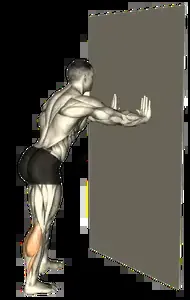
Why it matters
The Calf Wall Stretch builds strength and size in your calves. As an isolation movement, it targets those muscles directly to build size and balance.
How to do it
- Ease into the position without forcing the range.
- Set the balls of your feet on a stable surface with your heels free to drop.
- Find a light hold for balance if you need it.
- Rise onto the balls of your feet as high as you can.
- Pause for a beat at the top.
- Lower under control until you feel a full stretch through your calves.
- Move to the first point of tension and hold there, breathing steadily.
Coaching cues
- Tension, never pain — back off the moment it sharpens.
- Rise as high onto your toes as possible at the top.
- Lower under control into a full stretch at the bottom.
- Pause briefly at the top to remove any bounce.
- Rise all the way onto your toes and squeeze your calves at the top.
Watch out for
-
Bouncing or forcing into the end range.
This takes work off the target muscle and reduces what you get from the set.
Instead Hold a still position and let the tissue release on its own.
-
Bouncing through short, fast reps.
Short bounces use the tendon’s spring instead of your calves, so they do less work.
Instead Pause at the top and control a full stretch at the bottom.
-
Cutting the stretch short at the bottom.
Skipping the stretch removes the part of the range that builds the most.
Instead Let your heels drop below the platform for a full stretch.
-
Letting the ankles roll outward as you rise.
Rolling out sends force through the outside of your foot instead of your calves.
Instead Drive evenly through your big toe and keep your ankles stacked.
The detail
- Tempo
- Rise with control, pause at the top, then lower slowly.
- Breathing
- Exhale as you rise, breathe in as you lower.
- Range of motion
- Move from a deep heel-dropped stretch to a full rise on your toes. Take the calves through its full working range each rep.
- If you are new to it
- Do the movement on flat ground before adding a deficit or load.
- Once it is easy
- Add a two-count pause in the stretched position for extra range.